Friday, July 28, 2017

Arabic News Site Casts Trump as a Character in Taming of the Shrew

Al-Quds Al-Arabi, an Arabic-language news source out of Jerusalem, recently published an essay entitled: "The Taming of Trump and his Appeasement." The piece compares world leaders' attempts to negotiate and deal with Trump to Petruchio's taming of Katherine. The following is a rough translation of the essay's opening:

One of William Shakespeare's plays, "The Taming of the Shrew," tells the story of a rich young man marrying the famous daughter of a successful merchant father who is famous for her recklessness and cruelty. His use of many tricks to tame her, ranging from violence to claimed madness to denial of the comforts of life, made her, after a lengthy conflict with her intelligent husband, the most obedient of her father's daughters, and her inheritance doubled!

The play, perhaps because of its comedic character, is suitable as a political approach to the ways in which world leaders have treated US President Donald Trump, who is also famous for a history that combines television entertainment and significant wealth with reckless populist policies that strike left and right and call for severe reactions from foreign countries, from judicial and political institutions, and from the American and global media.

A number of things are striking in this comparison, not the least of which is the recasting of Trump, who boasts a masculinized persona, as a Katherine who must be tamed by more reasonable forces around him. I wonder if the author has ever read The Tamer Tamed?

Source: http://www.alquds.co.uk/?p=755314

Thursday, December 15, 2016

Says Othello: "Remember Aleppo"

Arabi21 News recently published a portrait of Aleppo in anticipation of its fall. Much of the article is an effort to emphasize the deep history of the city and its people. Alongside reminders that the city is among the oldest in the world, and listed among its contributions to world culture, the article states:

"Among the witnesses of Aleppo's public renown is that it is mentioned twice in the stories and plays of William Shakespeare, in Macbeth and in Othello."

The passages in question are, of course, the words of the First Witch in Macbeth, Act 1, Scene Three: "Her husband's to Aleppo gone, master o' the Tiger," a reflection of the city's place in the economy of Jacobean England, and of Britain's shipping ties in the Mediterranean.

The second is far more famous, as Othello's final speech before his death in Act 5, Scene 2, in which he describes his killing a Turk who had beaten a Venetian:

Soft you; a word or two before you go.
I have done the state some service, and they know't.
No more of that. I pray you, in your letters,
When you shall these unlucky deeds relate,
Speak of me as I am; nothing extenuate,
Nor set down aught in malice: then must you speak
Of one that loved not wisely but too well;
Of one not easily jealous, but being wrought
Perplex'd in the extreme; of one whose hand,
Like the base Indian, threw a pearl away
Richer than all his tribe; of one whose subdued eyes,
Albeit unused to the melting mood,
Drop tears as fast as the Arabian trees
Their medicinal gum. Set you down this;
And say besides, that in Aleppo once,
Where a malignant and a turban'd Turk
Beat a Venetian and traduced the state,
I took by the throat the circumcised dog,
And smote him, thus. [Stabs himself]

In a way, it is poignant that defenders of such a great city cite as evidence of its humanity the words of a writer such as Shakespeare. Syrians, after all, do not need Shakespeare in order to be human. There is much in Aleppo's history that is admirable and noteworthy, aside from two brief mentions by a writer from an island far away.

And yet, in light of current events, there is something very fitting in the fact that one of Shakespeare's most tragic characters ends his role with a speech that essentially says:

"Remember Aleppo"

Wednesday, September 21, 2016

New Translation of Midsummer Night's Dream in Egyptian Colloquial Arabic

Abd al-Raheem Youssef has just published a new translation of Shakespeare's Midsummer Night's Dream in Egyptian colloquial Arabic. To my knowledge (and according to the translator), this is the first time anyone has undertaken such a project. Though there are a number of translations of Midsummer in Modern Standard Arabic, few exist in the Egyptian dialect. This is reflective of a growing trend of Shakespeare translations into colloquial Arabic. Certainly curious to see more!
]


Saturday, April 23, 2016

400th Anniversary updates

Today being the 400th anniversary of Shakespeare's death, now seems as good a time as ever to highlight a few things that have happened in the world of Arab Shakespeare scholarship since Margaret Litvin "passed the torch" for this blog at the beginning of the year:

Litvin's new book, co-edited by Marvin Carlson, recently came out. Entitled Four Arab Hamlet Plays, this collection features English translations of four prominent productions of Hamlet by Moroccan Nabyl Lahlou (Ophelia is Not Dead, 1968), Syrian Mamduh Adwan (Hamlet Wakes Up Late, 1976), Jordanian Nader Omran (A Theatre Company Found a Theatre and Theatred "Hamlet," 1984), Iraqi Jawad al-Assadi (Forget Hamlet, 1994). The book helps fill a growing need in global Shakespeare studies for similar translations in order expand the audience and readership of non-Anglophone Shakespeares. (http://www.amazon.com/Four-Hamlet-Plays-Marvin-Carlson/dp/099068475X)

Another book by Sameh Hanna (University of Leeds), Bourdieu in Translation Studies: The Socio-cultural Dynamics of Shakespeare Translation in Egypt, was published by Routledge in late March. In it, Hanna explores Arabic translations of Hamlet, Macbeth, Othello, and King Lear in light of Pierre Bourdieu's "sociology of cultural production." (http://www.amazon.com/Bourdieu-Translation-Studies-Socio-cultural-Interpreting/dp/1138803626/ref=sr_1_1?s=books&ie=UTF8&qid=1461429735&sr=1-1&keywords=sameh+hanna)

On April 5, the Globe to Globe Hamlet tour, which consisted of a company of actors from Shakespeare's Globe in London performing Hamlet in every country in the world at least once, finished its tour of the Arab world with a performance in Erbil, Iraq. This tour included performances in the West Bank and in refugee camps near (but not within) Yemen and Syria, as well as two shows in Malta (in lieu of Libya). The group's visit to Saudi Arabia on January 9th likely marked the first professional production of Hamlet on Saudi soil. (http://globetoglobe.shakespearesglobe.com/hamlet/the-map/north-asia?date=01+Apr+2014)

Lastly, this blog received a shout-out on arablit.org in a post by freelance journalist M. Lynx Qualey entitled "Arabic Shakespeares: From Theatre to TV to YouTube." The post features "out-takes" for another article of hers posted today at The New Arab: "The Arabic Shakespeares: Subversive, political, and entertaining."

In the near future, look forward to posts about the Shakespeare conference occurring today in Alexandria, Egypt (live-tweeted by @GlobalShaxpeare), as well as a prominent Egyptian Shakespeare scholar and translator of the 1920s and 30s who later immigrated to the United States and has been described as "immigrant zero" for Egyptian-Americans.

Friday, January 15, 2016

Passing the baton

After almost ten years of keeping up this blog -- sometimes obsessively, but alas often desultorily -- I'm delighted to hand it over to fellow Shaksbir-ologist David Moberly of the University of Minnesota.
 
Trained as a bona fide early modernist ("Turk" dramas, captivity narratives), David has more recently turned to modern Arabic adaptations of Shakespeare (1927-present). He has already been running a fantastic Facebook feed of Shakes-related Arabic news and cultural production, and he has contributed some fun movie notes to the Global Shakespeare online archive. We haven't met in person, but hopefully that will happen at the Arab/ic panel at the World Shakespeare Congress in London this coming August 5, 1:30-3pm.

Over to you, David -- مع ألف سلامة!

--Margaret Litvin


Wednesday, November 11, 2015

PhD fellowship for World Shakespeare Bibliography

Texas A&M University has decided to support the World Shakespeare Bibliography Online by bringing in a PhD student to work on this project full time. This is a really cool resource but much in need of updating. It would be wonderful to get an Arabist into this position!  Details at http://www.worldshakesbib.org/intro/graduate_fellowship.html

Here's the beginning of the announcement:

World Shakespeare Bibliography Online PhD Student Fellowship

The World Shakespeare Bibliography is seeking doctoral fellows interested in early modern literature and/or digital humanities.
The selected fellow will be an incoming PhD student in English at Texas A&M University. The World Shakespeare Bibliography PhD fellow will serve as a graduate research assistant in the English Department at Texas A&M, which pays a monthly stipend and includes health insurance. The University pays tuition for students holding fellowships and assistantships.
The World Shakespeare Bibliography PhD fellow will work for the World Shakespeare Bibliography for one year. The fellowship is for nine months, with a strong likelihood of summer support. After the first year, students will be shifted to a graduate teaching assistantship in the English Department, at the same funding level. Students are also eligible for many additional funding opportunities, through the English Department, the College of Liberal Arts, the Office of Graduate and Professional Studies, Cushing Memorial Library and Archives and the Melbern C. Glasscock Center for Humanities Research). Graduate assistantships are renewable for a total of five years, contingent on good progress toward the degree.
The successful applicant will have the opportunity to learn about the cutting edge of Shakespeare scholarship and will gain work experience in a longstanding global digital humanities project. Fellows will have the opportunity to work in a vibrant department with strengths in early modern studies and digital humanities. World Shakespeare Bibliography fellows will be encouraged to take advantage of the rare book collection at the Cushing Memorial Library and Archives and opportunities available through the Initiative for Digital Humanities, Media, and Culture. The World Shakespeare Bibliography PhD fellow will be eligible to apply for funded conference travel, a student exchange to Aberystwyth, Wales, and further training programs such as the Digital Humanities Summer Institute. Texas A&M is a member of the Folger Institute Consortium, and our students and staff regularly participate in Folger Shakespeare Library events.
Ideal applicants will be strong academic candidates with interest in early modern studies and/or digital humanities. Basic computer skills required: specific training will be given upon arrival. The strongest candidates will be self-motivated, detail-oriented students looking forward to gaining new research skills. Second languages are helpful but not required.

Wednesday, October 21, 2015

Funding available to attend World Shakespeare Congress

The British Council is supporting some scholarships to attend the congress in the UK this summer. Here's the announcement. Deadline Monday 16 November.  It would be great to see some early-career Arab Shakespeareans there.

Friday, September 25, 2015

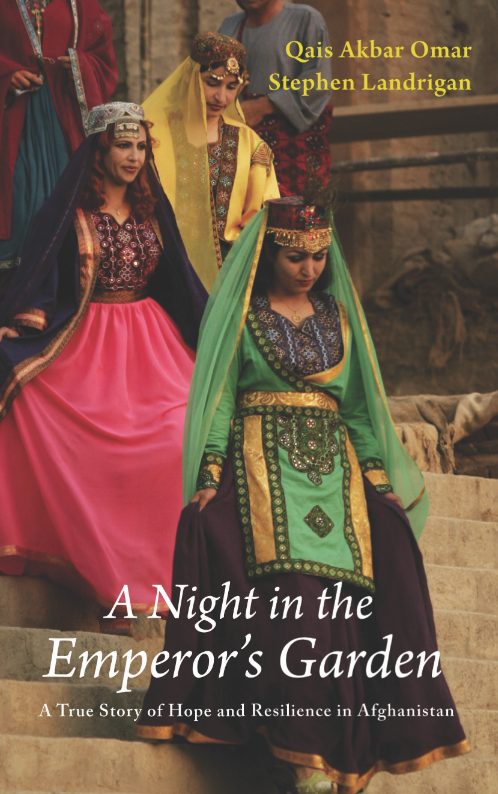
More on Shakespeare in Kabul

The show was ten years ago, the first book about it (as this blog reported) was three years ago, and it's still not Arabic-related.  But never mind.  Here's another book:

 Coming soon to a bookstore near you.

Thursday, August 27, 2015

Academic article on Arab Shakespeares for British audiences

Happy to report that three years after the theatre festivals it analyzes, the article I co-authored with Saffron Walkling and Raphael Cormack for the Routledge journal Shakespeare is live: 
Margaret Litvin, Saffron Walkling & Raphael Cormack (2015): Full of noises: when “World Shakespeare” met the “ArabSpring.” Shakespeare.

We look from various angles at Ashtar's Richard II, Monadhil Daood's Romeo and Juliet in Baghdad, and APA's Macbeth: Laila and Ben--A Bloody History.
First 50 readers can download an eprint here.

Wednesday, August 5, 2015

Arab Shakespeares at WSC 2016

The World Shakespeare Congress has posted its program for next summer's WSC, to be held in Britain.We have an amazingly diverse set of topics (translation, performance, film, plays, sonnets, sources...) on our Arab Shakespeares panel, and I'm happy to see some dynamic younger scholars joining the conversation.

“Re-Casting Shakespeare: Translations, Adaptations, and Performances Across the Arab World”
Katherine Hennessey (University of Warwick/Queen Mary University of London, United Kingdom), Margaret Litvin (Boston University, United States), Graham Holderness (University of Hertfordshire, United Kingdom), Rafik Darragi (University of Tunis, Tunisia), David C. Moberly (University of Minnesota, United States), Noha Ibraheem (Cairo University, Egypt), Paulo Horta (New York University Abu Dhabi, United Arab Emirates)

Monday, August 3, 2015

In Unfair Palestine (Romeo, Juliet, and localization)

Here is the first book I was ever asked to blurb: Tom Sperlinger's just published memoir Romeo and Juliet in Palestine. He was at Al-Quds University in the West Bank for just five months in 2013. It's a pretty good read and (most importantly) tries to be honest about its limits. The Guardian liked it too. A good excerpt was published at Mondoweiss back in 2013.


I find it interesting that most of the students aren't interested in Arab-Jewish Romeo-and-Juliet combos. Their minds run more toward a union between two Palestinians, one with Jerusalem ID and the other with West Bank ID. Isn't that star-cross'd enough?

On the subject of Palestinian adaptations, here's a 2008 film called In Fair Palestine made by high school students at the Ramallah Friends School. Also an intra-Arab story. You can buy it online and watch a clip here:


Of course, there have also been lots of adaptations that take the play in an Arabs-and-Jews direction, including a just-post-Oslo bilingual co-production in Jerusalem by the (Jewish) Khan Theatre and the (Arab) Kasaba Theatre (see, e.g., this admiring Baltimore Sun writeup).

[Update  9/8/15: I just found a video with some excerpts online. Enjoy!]


It has even been done in a comic vein, as in the short falafel musical West Bank Story.


Translator and theatre scholar Avraham Oz, with whom Parviz Partovi and I are co-writing an article on Shakespeare in the Middle East, makes a good point about Romeo and Juliet as a vehicle for Israeli-Palestinian issues:

Whereas Shakespeare makes a point to emphasize that none remembers the origin of the ancient feud between the Montagues and Capulets (not fortuitously omitting the one vague reference to that origin in Brooke’s poem), the cause of the conflict between Israel and the Palestinians is far from being unknown. If that be the rationale of reading the Shakespearean text, a play such as Troilus and Cressida would better fit the symbolic analogy.
He adds:
When, however, the latter was mounted at the Habima in 1980, Rumanian director David Essrig revived in it his successful production formerly created in Bucharest, and what could have served a topical political allegory for the Middle East conflict reminded one of an East European fable, which was missed by the Israeli audience and removed from stage after a few performances.
So it goes.

Thursday, July 16, 2015

Al-Bassam's Arab Shakespeare Trilogy and my two interviews with him

Sorry I've been neglecting this blog a bit. Should have some exciting publication news for you soon.
Meanwhile: Did I forget to mention that Sulayman Al-Bassam's Arab Shakespeare Trilogy came out last fall from Bloomsbury Methuen Drama, comprising the texts to his Al-Hamlet Summit, Richard III: An Arab Tragedy, and The Speaker's Progress? Intro by Graham Holderness. You can get your epub or hard copy direct from Bloomsbury. As you do so, notice that for "theme" they've categorized it under "Conflict, Other Cultures, Society."

Thanks largely to Holderness, subtitled videos of all the plays in the trilogy are available, along with a lot of secondary material including my work, on the Global Shakespeares site.

I've also published two interviews with Al-Bassam recently, a really fun one in the Palgrave collection Shakespeare and the Ethics of Appropriation (adapted from a really fun late-night conversation in Beirut in 2011 and yes, that's his Richard III on the cover, and an updated version of my essay on his trilogy is in the book too)

and a somewhat duller one in the PMLA special issue on Tragedy.

Monday, July 6, 2015

Filling in Iraqi Hamlet history

Just came across this article from a year ago (June 2014) by `Awad `Ali on the Iraqi site al-Mu'tamar (in Arabic): Hamlet in the Arab Experimental Experience. A few details on experimental Iraqi Hamlet productions by Hamid Muhammad Jawad (1967) and Salah al-Qasab (1980) as well as the more recent هاملت البابلي (Hamlet of Babel) directed by Muhammad Hussein Habib (2009). In Arabic.

Wednesday, June 3, 2015

Hamlet's Trial (offshoot play)

For my own reasons I just Googled غولدنشترن to find out who besides Mamduh `Adwan uses this spelling for Hamlet's friend.  I came across a 2010 PDF script for a offshoot play called Hamlet's Trial, which "takes up where the splendid William Shakespeare left off." By one Ala'a al-Gharbawi.  It's also at this blog.  It includes a very brief Author's Note "for those who have never read Shakespeare's play before."  Anyone have details?  No time to read it now, but maybe you'd like to. 

Wednesday, March 18, 2015

CFP: International Shakes Conference - UMass - September

Call for papers: The 2nd  International Shakespeare Conference: Translation, Adaptation, Performance
"Where in the World is Shakespeare?"
September 18-20, 2015
University of Massachusetts Amherst
Amherst, MA, USA

What makes Shakespeare funny in Kabul? In 2005, Corinne Jaber claimed (somewhat tongue-in-cheek) that ?Afghans don't do tragedy.? This idea shaped her production of Love's Labour's Lost, which she staged with the Roy-e-Sabs Troupe in the garden of a Kabul estate formerly occupied by a nobleman 150 years ago. Making Shakespeare's humor ?work? or translate in Anglophone productions is a challenge for many contemporary directors. Making it work in Dari and in a space fraught with war and occupation poses an even more complicated set of challenges. How does such a production raise questions about the comedy genre and what makes something funny? How does it raise questions about audience or national identity? The same troupe would eventually stage Comedy of Errors (in Dari) at the Globe Theater in 2012, which signifies a transnational Shakespeare even as it re-places the play in its ?original space.?

This is one example of the degree to which Shakespeare has shifted from the centrality of an authoritative text to a multi-center model where different (and often peripheral) Shakespeares exist and cross-influence each other. In this framework, questions of authenticity and intent give way to discussions of Shakespeare in terms of influence and his works as a globalizing force. For the second edition of the International Shakespeare Conference, we seek submissions from a wide range of topics related to the translation, interpretation and adaptation of Shakespeare, including:

    Shakespeare in theater, performance, film, music, visual arts
    Shakespeare in and as pedagogy
    Shakespeare in the context of social justice
    Shakespeare and applied theater
    Shakespeare and materiality
    Case studies of Shakespeare in translation
    Digital Shakespeare(s)
    Intralingual, interlingual or intermedial translation of Shakespeare
    Imitation and reception of Shakespeare worldwide
    Comparative analyses discussing the influence of the Shakespearean linguistic or cultural legacy
    Theoretical approaches to global Shakespeare: postcolonialism, race, gender, sexuality, alterity

The conference will take place September 18-20, 2015, at the University of Massachusetts Amherst. Please e-mail a 250 word abstract to isc.umass@gmail.com by May 15.

Sponosred by Program in Comparative Literature | Department of English | The Massachusetts Center for Interdisciplinary Renaissance Studies | College of Humanities and Fine Arts | International Programs Office | Translation Center

For details, visit http://umass.edu/shakespeare/ or for more information (also available in French, Polish, and Spanish), or contact Edwin Gentzler at gentzler@complit.umass.edu.

Monday, October 27, 2014

New book chapter on Arab Awakening Shakespeares by Rafik Darragi

Prof. Darragi has an essay on "Shakespeare and the Political Awakening in the Arab World: An Analysis of Some Arab Adaptations of the English Bard," in here:
Picture of Shakespeare and Tyranny

Shakespeare and Tyranny: Regimes of Reading in Europe and Beyond

Editor(s): Keith Gregor
Contributors: Mariangela Tempera, Hywel Dix, Francisko Fuentes, Mario Victor Bastos, Noemi Vera, Michele De Benedictis, et al.

Tuesday, August 12, 2014

Palgrave "Global Shakespeares" Series: Call for Short, Quick Book Proposals

This new series, of whose editorial board I'm a member, is getting off to a great start.  It would be fabulous if some aspects of Arabic Shakespeare could be represented.

Global Shakespeares 
ISBN 9781137354907
Formats: Hardcover
Publisher: Palgrave Pivot
Series Editor: Alexa Huang

This series in the innovative Palgrave Pivot format explores the global afterlife of Shakespearean drama, poetry and motifs in its literary, performative and digital forms of expression in the twentieth and twenty-first centuries. Published within three months of acceptance of final manuscript, these landmark studies of between 25,000 to 50,000 words will capture global Shakespeares as they evolve.
 
Disseminating big ideas and cutting-edge research in e-book and print formats, and drawing upon open-access resources such as the 'Global Shakespeares' digital archive (http://globalshakespeares.org/), this series marks a significant
addition to scholarship in one of the most exciting areas of Shakespeare studies today.

More info and submission guidelines: http://www.palgrave.com/page/detail/global-shakespeares-alexa-huang/?K=9781137354907
 

Friday, August 1, 2014

Hath Not a Jew Eyes? (on Gaza)

Reclaiming and deploying Shakespeare's Shylock as an exponent of empathic (if besieged) humanity, Israeli columnist Gilad Isaacs (@giladisaacs) movingly argues in today's +972mag that Europe's Jews have "lost their humanity" and succumbed to a kind of (uncharacteristic, he says) moral blindness in Gaza. Retelling the story of Jewish emancipation, near-extermination, and nationalist organization in Europe, he concludes:
The Jews are no longer knocking on doors to be let in. We have our own fortress now, bristling with arms. But the cost has been heavy; on the altar of nationalism and ethnic supremacy we have sacrificed the long-cherished ideal of common humanity. Israelis and Zionist Jews, and their most vociferous supporters, can no longer see themselves in the Palestinians. And what we are left with is the second half of Shylock’s speech:
And if you wrong us, shall we not revenge? If we are like you in the rest, we will resemble you in that. If a Jew wrong a Christian, what is his humility? Revenge. If a Christian wrong a Jew, what should his sufferance be by Christian example? Why, revenge. The villany you teach me, I will execute, and it shall go hard but I will better the instruction.

Monday, July 14, 2014

Global Shakespeare postdoc in London and Warwick - deadline is SOON

The new Global Shakespeare project at Queen Mary University of London, run by David Shalkwyk and Jerry Brotton, is hiring two 2-year postdocs: http://www.jobs.ac.uk/job/AJB208/global-shakespeare-research-fellow-x2/

You can find lots more info on the Global Shakespeare collaboration at their new web site.

Monday, June 30, 2014

What hast thou to do with me, old Jephthah?

Illusions?  Allusions?  Both?  I'm reposting this letter from a reader:

Dear Professor Litvin
You might be interested in my discovery of a subtle illusion in Hamlet to the (ancient) Middle East war. As I explain on my website, Hamlet’s mention of “old Jephthah” is meant to point to these lines in the Biblical story of old Jephtha: Judges 11.12
… What hast thou to do with me, that thou art come against me to fight in my land?
Judges 11.13
…Because Israel took away my land… now therefore restore those lands again
I discuss this, and it’s connection with the Spanish Armada, on my free and and ad-free website, “Smith’s Hyper Hamlet”, www.thyorisons.com.
Please see the following essays on my website:
I Know a Hawk from a Handsaw – Hamlet and the Spanish Armada
http://www.thyorisons.com/#Handsaw
Hamlet in a Nutshell – Hamlet Is an Anti-War Play
http://www.thyorisons.com/#Nutshell
How to Love Hamlet – http://www.thyorisons.com/#Love_Hamlet
Sincerely
Ray Eston Smith Jr
email: thyorisons@gmail.com